Онлайн-курсыЖурналПроверь себяСпецпроектыПодкасты

Your card gets blocked. Why it happens and what to do next

12.08.25

7 мин

Your card gets blocked. Why it happens and what to do next

The bank's primary goal is to keep your money safe and prevent illegal transactions. Card blocking is used by a financial institution to protect your savings from fraudsters. You can find these and other reasons for suspending card operations on the bank's official websites and in its list of rules. Read more about why a card gets blocked in the article by SberSovа.

Why has the card been blocked?

If the bank card is compromised, the bank can block it.

The bank suspects a leak of key card data in the following cases:

  • The client makes unusual transactions using the card. The bank may consider the client's behavior as suspicious and block the card. For example, if a retiree who only uses the card for purchases suddenly makes one or several large transfers to someone’s account.
  • The client pays for goods or services on an unsecured website.
  • The client entered the PIN incorrectly three times.
  • The financial institution has information that the card has been stolen.
  • The bank's fraud monitoring system detected a transfer from the card to an account with fraudulent details.

To know the exact reason for blocking, you can submit a request to the bank's technical support service, call the phone number indicated on the official website, or ask an operator in the mobile application.

The bank has blocked the card under Federal Law No. 115-FZ. What does this mean?

Blocking a card under Federal Law No.115-FZ is not a bank's whim. This is required by the rules established by the Central Bank to identify suspicious financial transactions.

The card can also be blocked when the bank suspects that the client conducts illegal financial transactions — for example, laundering of criminal proceeds. In accordance with Federal Law "On Countering the Legalization (Laundering) of Illegal Earnings (Money Laundering) and the Financing of Terrorism", banks must check all client transactions and identify suspicious ones — for instance, those resembling illegal conversion of non-cash funds into cash or illegal transfer of funds abroad.

The bank will consider it suspicious if a client makes a financial transaction which seems useless: for example, buying and quickly selling a product at a discount. The financial institution will also doubt the legality of the transactions if the client regularly deposits money to the accounts of individuals without valid reasons and systematically withdraws money.

This also includes operations that are not typical of of the company's core business, as well as transferring money to a non-resident without the import of goods, which can be confirmed by tax returns.

If the bank has doubts about the legality of transactions, it has the right to:

  • temporarily block the client's bank cards;
  • disable access to online banking;
  • refuse to dispense cash or execute an online transfer;
  • refuse to open an account, issue or reissue a card.

At the same time, banks are required to block the accounts of individuals and legal entities involved in extremist activities or terrorism and report violations of Federal Law No. 115-FZ to the Federal Financial Monitoring Service (Rosfinmonitoring). This interdepartmental body compiles a list of violators with whom no Russian bank will be able to work in the future.

What to do and how to prove the legality of financial transactions

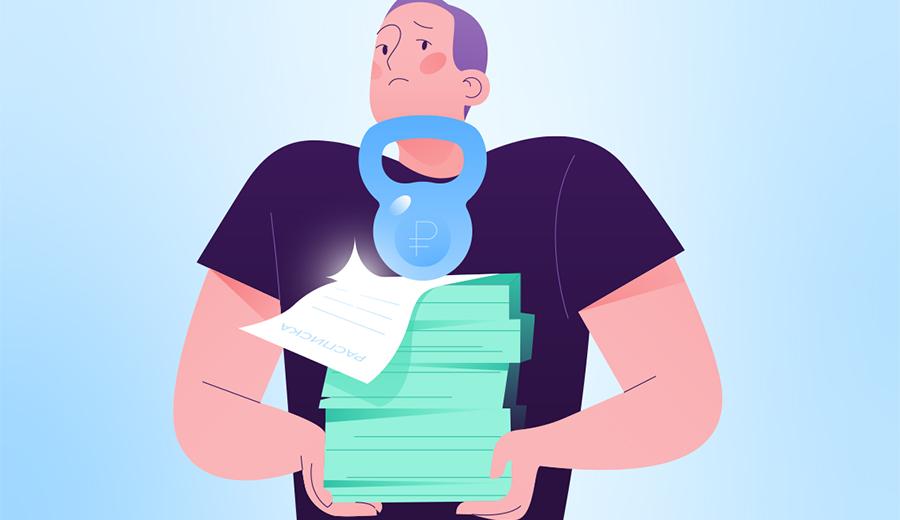
So, you disagree with the bank's suspicions regarding the legality of your transactions. The financial institution may request information from you about the origin of the funds in your accounts and the justification for the transaction. Cooperate with the bank: send the information it is interested in to the specified address and by a given deadline. Try to describe your actions in detail to increase the chance of a favorable outcome for you.

In case of card blocking under Federal Law No. 115-FZ, the bank will ask you to provide the necessary documents.

These include:

  • a certificate of income and tax amounts for individuals. Previously, it was called a 2-NDFL certificate;
  • a 3-NDFL tax return;
  • statements from other banks certified by the issuer;
  • other documents with information about your income.

Let's take a closer look at the last point and analyze what documents will be required in each case depending on the source of income.

  • If it is a salary, travel expenses, or accountable funds, the possible documents are: a copy of the employment record, an employment contract with existing appendices, an order of employment or a civil law contract, an order to send an employee on a business trip, an order to issue accountable funds.
  • When the source of income is proceeds from legal entities and individuals under a contract, the possible documents are: a contract with all appendices and supplementary agreements, a transfer and acceptance act, a service provision document, a receipt, a tax invoice, receipts for receiving, documents confirming ownership rights to the goods sold, documents confirming that you previously provided a loan to the legal entity, a receipt for a cash receipt order, a payment order, and a statement from an account opened at a third-party bank.
  • If the income is dividends, the possible documents are: a decision by the participants or minutes of the general meeting of shareholders on the payment of dividends, an extract from the register of shareholders, documents confirming the payment of personal income tax on dividends, and the company's balance sheet for the period of dividend payment.
  • When the income is proceeds from my account opened for me as an individual entrepreneur, the possible documents are: an extract from the individual entrepreneur's account, documents confirming the payment of taxes, fees, and other mandatory payments — payment orders, including, in the case of payment by third parties, receipts for the payment of taxes and fees, documents confirming the absence of grounds for paying taxes.
  • If the income consists of other proceeds from individuals, the following documents may be required: written explanations of the economic nature of the relationship with the individuals from whom the money is received, with supporting documents; for fundraising, a link to the content or the website that clearly states the details and purposes of fundraising.
  • If the income is proceeds from cryptocurrency transactions, possible documents include: the address of the exchange/exchanger where the cryptocurrency was bought or sold, the username or nickname used to make the transactions, a screenshot of the personal account that allows clearly identifying the account owner, history of cryptocurrency purchase and sale transactions — a statement indicating the date of the transaction, the exchange rate, the amount of cryptocurrency purchased/sold, a profit and loss statement based on the results of cryptocurrency trading for each digital currency for closed positions. If cryptocurrency purchase and sale transactions were conducted on different exchanges/exchangers, then documents and explanations for the above items must be provided for all platforms.

If there is no option which is applicable in your case, it is worth sending an explanation in free form. Describe the income you received and its sources, and provide supporting documents. If you do not have supporting documents, indicate the reason.

Why bank card transactions may be restricted

Data on fraudulent activities involving cards and accounts are recorded in the special Central Bank database — law enforcement agencies and financial organizations can use this information and supplement it.

If a client is added to the Bank of Russia's database of fraudulent transactions, then starting from 15 May 2025, a restriction will apply — a monthly limit of 100,000 rubles for all transfers to themselves or other people.

It is important: if information about fraudulent transactions is received by the Central Bank from law enforcement agencies, the bank must block the client's cards and access to online banking.

Why has the limit of 100,000 rubles been established?

This amount does not allow dropping – withdrawing and cashing illegal funds. At the same time, it is sufficient for making essential purchases and payments.

Exception

The restriction does not apply to payments made to legal entities. This means that a person included in the database of fraudulent transactions will still be able to use the card and make purchases in online stores and on e-commerce platforms.

SberSova's Tips to Avoid Blocking under Federal Law No. 115-FZ

  1. Do not transfer money to unusual accounts.
  2. Do not agree to suspicious offers to earn money.
  3. Do not withdraw large amounts of money.
  4. Do not share your card details with third parties and follow digital hygiene rules.
  5. Consult with the bank staff if you have any doubts.
  6. Use a corporate settlement account for business transactions.
  7. Ordinary everyday transactions — like purchases in a grocery store or periodic transfers to your child or parents — do not raise questions. However, there are specific criteria for identifying suspicious transactions, ranging from an unusually large number of people you send money to, to receiving a prize.
  8. Try to ensure that your transactions can be documented or explained. This will help resolve even contentious issues quickly.

#по закону

#новости

В избранное

Вам может быть интересно

  • Другие статьи этого раздела

    Россия, Москва, 117997, ул. Вавилова, 19

    © 1997—2025 ПАО Сбербанк

    Генеральная лицензия на осуществление банковских операций от 11 августа 2015 года. Регистрационный номер — 1481.

    www.sberbank.ru

    На этом сайте используются Cookies.

    Подробнее